
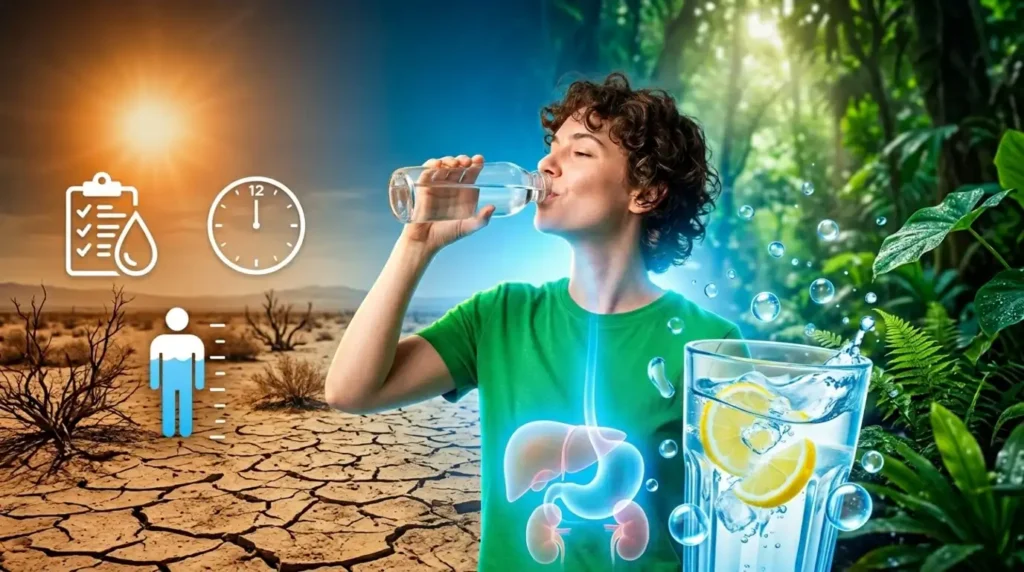

For decades, we’ve been told that “eight glasses a day” is the golden rule for health. However, as nutritional science has evolved, we’ve learned that hydration is not a static number, it is a moving target.
Whether you are navigating a humid summer in Florida, a dry winter in Calgary, or a rainy commute in London, your body’s fluid requirements change based on your biology and your environment.
The Myth of the “8×8” Rule
The famous advice to drink eight 8-ounce glasses of water a day (the 8×8 rule) is easy to remember, but it lacks scientific backing for the individual. Human beings are diverse in size, metabolic rate, and activity level. A 200lb athlete in the US Sunbelt requires vastly different hydration than a sedentary office worker in the UK.
To find your true baseline, you must look at your body as a unique ecosystem.
Key Factors That Influence Your Water Needs
1. Body Mass and Composition
Water is stored primarily in lean muscle tissue. Therefore, your total body weight is the most significant factor in determining your baseline. Generally, the more you weigh, the more water your internal systems require to process nutrients and flush toxins.
2. Physical Activity and Sweat Rate
When you exercise, you lose fluid through respiration and perspiration. In Canada and the UK, where indoor heating can be quite dry during winter, you might be losing more fluid through “insensible water loss” (breathing) than you realize. If you are engaging in high-intensity interval training (HIIT) or long-distance running, your intake must increase to compensate for these losses.
3. Environmental Variables
Climate plays a massive role.
- Heat & Humidity: High temperatures increase sweat.
- Altitude: Residents in high-altitude regions (like parts of the Western US and Canada) breathe more rapidly, losing more water vapor.
- Cold Weather: In colder climates, the body’s thirst response is actually diminished, making it easier to become dehydrated without noticing.
4. Life Stages: Pregnancy and Breastfeeding
Women who are pregnant or nursing have significantly higher fluid requirements to support fetal development and milk production. Hydration in these stages isn’t just about the mother; it’s about the health of the child.
How to Calculate Your Personalized Daily Intake
Instead of guessing, you can use mathematical formulas that take into account your weight and activity levels. For the most accurate, data-driven result, use our Water Intake Calculator. This tool allows you to input your specific metrics to move beyond generalizations and get a number tailored to your lifestyle.
Beyond the Bottle: Do Other Drinks Count?
A common misconception is that only plain water counts toward your goal. In reality, your total water intake comes from:
- Hydrating Foods: Fruits and vegetables like watermelon, cucumbers, and oranges are roughly 90% water.
- Beverages: Coffee, tea, and fruit juices do contribute to your daily total. While caffeine has a mild diuretic effect, the water content in a cup of tea still results in a net gain for your body’s hydration levels.
Signs You Aren’t Drinking Enough
Your body provides early warning signs when your fluid levels dip:
- The “Thirst” Lag: By the time you feel thirsty, your body is already slightly dehydrated.
- Cognitive Fog: Even 1-2% dehydration can lead to a lack of focus, headaches, and irritability.
- Urine Color: This is the most reliable “low-tech” indicator. Aim for a pale straw color. Dark yellow or amber indicates a need for immediate fluid intake.
Summary
Hydration is the foundation of energy, skin health, and kidney function. By moving away from “one-size-fits-all” advice and using precision tools to calculate your needs, you ensure your body has exactly what it needs to perform at its peak.